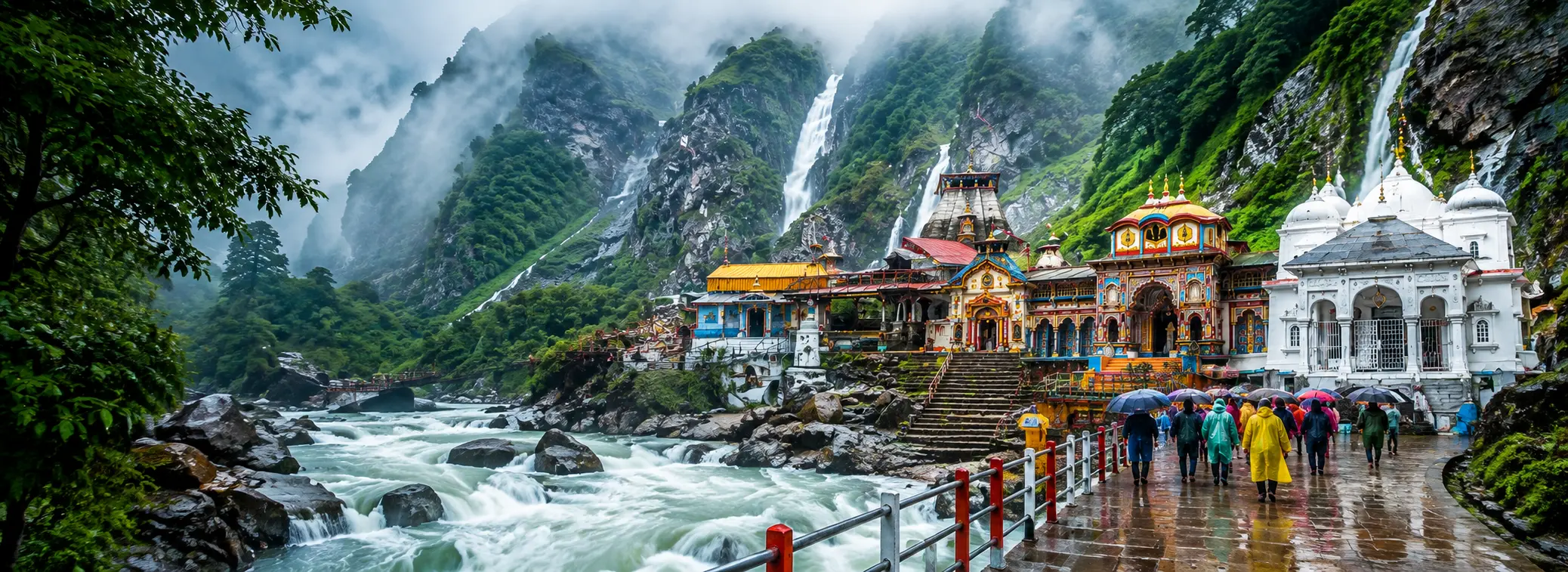
I'll give you the honest answer straight away, because most articles on this topic dance around it: yes, Char Dham Yatra can be done safely during monsoon, but it demands more caution than any other stretch of the season. July and August bring the heaviest rainfall to the Himalayas, and with that comes landslides, temporary road closures, and days where the weather simply decides your itinerary for you. It isn't a reason to cancel your plans. It is a reason to plan differently.
What's Actually Happening on the Routes Right Now
This monsoon season has been a fairly typical one for the region, which is to say, a difficult one. Rudraprayag, Chamoli and Uttarkashi districts have seen repeated spells of heavy rain triggering landslides at several points along the Kedarnath and Badrinath highways. At times, the administration has had to temporarily stop pilgrims at Sonprayag while debris is cleared from the Kedarnath trek route. The Yamunotri highway near Janki Chatti has faced similar disruptions after rockfalls, and the Gangotri road has had its share of blockages around Uttarkashi as well.
None of this is unusual for the season. Every monsoon, district disaster management teams go on standby, JCBs are stationed at known vulnerable points, and SDRF and NDRF teams remain ready to move. The system is built to handle exactly this kind of disruption, and it generally does — most closures clear within a few hours to a couple of days.
⚠ What This Means for You
A road that's open in the morning can close by afternoon after a few hours of heavy rain, and reopen again the next day. Build flexibility into your schedule rather than a fixed hour-by-hour plan, and never assume a route is guaranteed clear just because it was clear yesterday.
August vs September — Which Is Actually Better
If you have any flexibility at all in your dates, September is the better window, and it isn't close. Rainfall drops off noticeably after the first week or two of September, roads that took a beating in July-August get repaired, and the crowds thin out considerably compared to the June-July peak. I usually tell pilgrims who ask me this exact question that late September through mid-October is, in my experience, one of the most pleasant times to do the yatra — clear skies, green hillsides, and none of the bumper-to-bumper traffic you get in peak season.
If August is your only option — say, you have limited leave from work, or this is the only week your family can travel together — it's still doable. You'll just need to travel with a different mindset than you would in May.
| Factor | August | September |
|---|---|---|
| Rainfall | Heavy, frequent | Tapering off |
| Landslide risk | High on all four routes | Noticeably lower |
| Crowd levels | Moderate | Low, off-peak |
| Hotel availability | Generally easy | Very easy |
| Scenery | Misty, dramatic | Clear, freshly green |
Practical Tips If You're Travelling in the Monsoon Window
- Start every day's drive early. Most landslide activity picks up after a few hours of daytime rain, so being on the road by 6-7 AM keeps you ahead of the worst of it.
- Never travel after dark. Visibility drops, and so does the ability of anyone to spot loose debris on the hillside above the road.
- Build in a buffer day. If your itinerary has zero slack, a single closure can throw off your entire trip. One extra day changes that completely.
- Check the official advisory each morning, not a forwarded WhatsApp message from three days ago. Uttarakhand's disaster management authority and local district administrations issue same-day updates.
- Keep away from riverbanks and slopes at your overnight stops, especially in Rudraprayag and Chamoli, where local officials have repeatedly flagged this as a risk area during heavy rain.
- Travel with a driver who knows the route rather than a first-time hire. Someone familiar with these roads will recognise early warning signs — a slightly damp hillside, loose gravel — that an outsider would miss entirely.
Every year I get calls in August from families who say, "hum aa gaye hain, ab kya karein?" — meaning they've already reached Rishikesh and now the weather has turned. My advice is always the same: don't panic and don't push through a closed route. Wait it out at a safe base point. A day's delay is nothing compared to the risk of driving through an active landslide zone.
Frequently Asked Questions
Is it safe to do Char Dham Yatra during monsoon?
It can be done safely with the right precautions, though it needs more caution than other months due to landslides and temporary closures on all four routes.
Which month is safest right after monsoon?
September is generally the safest choice — rainfall drops significantly, roads get repaired, and crowds are much thinner than peak season.
What should I do if my route gets blocked by a landslide?
Stay put and wait for official clearance rather than trying an alternate track. Most closures clear within a few hours to a couple of days.