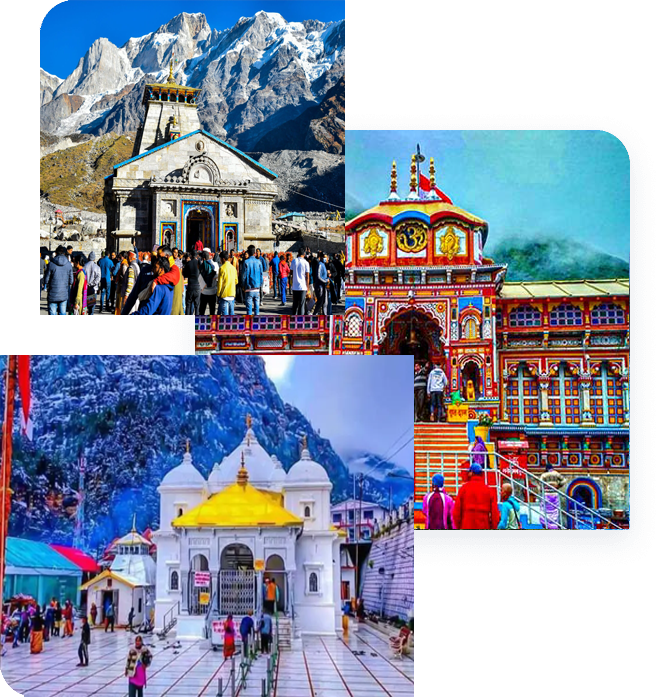
A few things have changed for Char Dham Yatra 2026, and honestly, most of them are overdue. There's now a mandatory medical check-up for certain pilgrims, mobile phones are banned inside the temples, vehicles can't move on the route after 10 PM, and entry is tracked through RFID-based QR passes. If you're heading to Yamunotri, Gangotri, Kedarnath or Badrinath this year, read this before you pack your bags. I've had families show up at Sonprayag with none of this sorted, and it's not a fun way to start a pilgrimage.
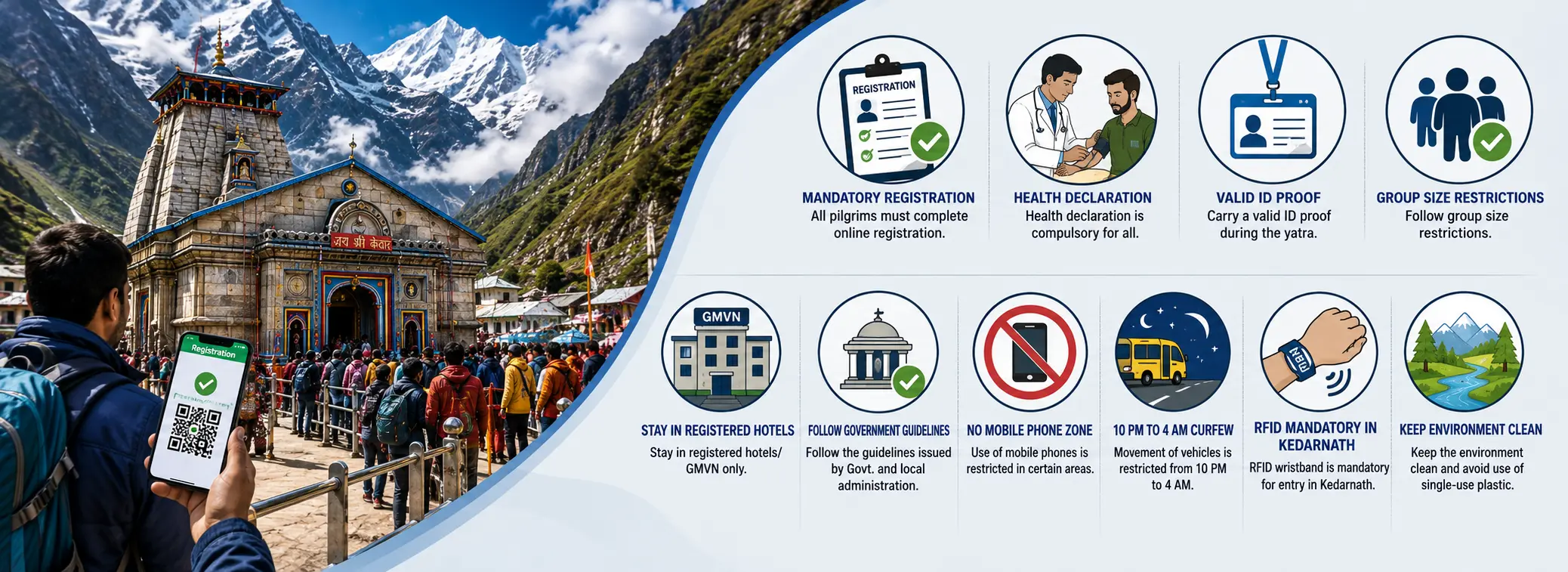
Quick Summary — Char Dham Yatra 2026 New Rules
- Medical check-up compulsory for pilgrims above 55 or with heart disease, hypertension, diabetes or asthma
- Mobile phones and cameras banned inside Kedarnath, Badrinath and Gangotri temple premises
- No vehicle movement on Char Dham routes between 10 PM and 4 AM
- Kedarnath daily entry capped at roughly 18,000 pilgrims, with RFID/QR passes scanned at checkpoints
- Valid biometric or online registration is required before you leave home
- Registration is now Aadhaar-verified, and it's stricter than it used to be
The Medical Check-up Rule
This is the big one for 2026. Altitude sickness and cardiac emergencies have caused a fair number of deaths on this route over the years, and the government has finally responded with a proper health protocol. A physical check-up is now compulsory before you set off, especially if you're over 55 or carrying a history of heart disease, hypertension, diabetes or asthma. There's also a health advisory out — "Swasth, Satark, Safal" — pushing pilgrims to spend at least a day or two acclimatising in Haridwar or Rishikesh before climbing toward Kedarnath or Badrinath. Don't skip that part. I've watched people rush straight from the plains to 11,000 feet and pay for it badly.
If you're doing the Kedarnath trek, get a fitness certificate from your doctor and carry it. Nobody's checking it at every single post, but I'd still rather have it in my bag than not, particularly for older pilgrims or anyone managing a condition already.
⚠ Who Needs Extra Precaution
If you've got high blood pressure, diabetes, asthma, or any heart condition, talk to your doctor before you travel. It's not a suggestion buried in fine print — the 2026 guidelines call this out directly.
Mobile Phones and Cameras Are Out
You can't carry a phone or camera into the temple premises at Kedarnath, Badrinath or Gangotri anymore. The idea is to keep the shrines a little more sacred and a little less chaotic, and frankly I don't mind it — I've seen darshan turn into a scramble for selfies more than once. There's nothing to worry about on the logistics side though. Cloakrooms sit right outside each temple where you drop off your phone before going in and pick it up on your way out. Yamunotri handles this slightly differently, so check the signage when you get there rather than assuming it's identical.
The 10 PM Vehicle Curfew
No vehicle, commercial or private, is allowed on the Char Dham route between 10 PM and 4 AM. This came in mainly to cut down on accidents caused by landslides and poor night visibility, both of which are a real problem in the hills. Vehicles now also need to clear a technical fitness test, and drivers are required to have specific training for hill driving. What this means for your trip: start early. If you're not on the road by first light, that 10 PM cutoff can sneak up on you fast, especially on the longer stretches.
Registration Isn't What It Used to Be
It's tighter now. Aadhaar-based verification is compulsory, and you need to show your registration slip or QR code at every checkpoint along the way. Turn up without it, and you'll be sent back at entry points like Sonprayag — no exceptions that I've seen.
Kedarnath's Daily Cap and the RFID Pass
Kedarnath now caps daily entry at somewhere around 18,000 pilgrims, and RFID-based QR passes get scanned at Sonprayag and a few other points on the way up. It's meant to keep the trail from getting dangerously overcrowded, and so far it's working. There's also more medical support on the ground this year, with relief teams and ambulances placed along the route.
In 37 years of doing this, I can tell you the pilgrims who sort their medical check-up and registration before they leave home have a much easier time of it. Getting held up at a checkpoint at the last minute is by far the most stressful part of the whole trip, and this year, there's really no reason for that to happen to you.
Frequently Asked Questions
Is a medical check-up mandatory for everyone?
It's recommended for all pilgrims, but only mandatory if you're above 55 or have heart disease, hypertension, asthma or diabetes.
Are mobile phones allowed inside the temples?
No. Phones and cameras stay outside at Kedarnath, Badrinath and Gangotri. Cloakrooms outside each temple hold them for you.
Can I travel without registration?
No. Aadhaar-verified registration is compulsory, and without it you simply won't get past the checkpoints.